Digital Customer Experience
Why Your Digital Customer Experience is Broken
The Problem Has a Structure, Not Just a Symptom
Sumeru's DCX Trifecta wasn't built in a strategy workshop. It came out of a program we ran with a Fortune 100 organization that had a problem most enterprise leaders know well: a world-class technology stack, a separate agency running marketing, and a third team managing analytics. No shared data model. No agreed definition of what a good customer outcome looked like.
Three workstreams. Three versions of the customer journey.
The result was predictable — and repeatable. We've seen it across financial services, life sciences, retail, and beyond. Campaigns that couldn't use the data the organization already had. Journeys that started well and fell apart between systems. Leadership with no clear picture of what was actually moving people from awareness to decision.
This is not a failure of capability. Each team was competent. The marketing agency was excellent. The analytics function was sophisticated. The technology stack was enterprise-grade. The failure was relational — three capable workstreams with no shared accountability for the thing that mattered most: the customer's experience of moving through a journey.
What the Data Shows About Fragmented DCX
In 2026, only 25% of marketers say they're satisfied with how they use data to power personalized moments — a finding from Salesforce's State of Marketing 10th Edition (n=4,450 marketing decision-makers globally, published February 2026). Among teams actively using AI, 98% reported at least one data-related barrier to personalization — whether data silos, poor data quality, or a lack of customer preference data.
The gap isn't in ambition. It's in architecture.
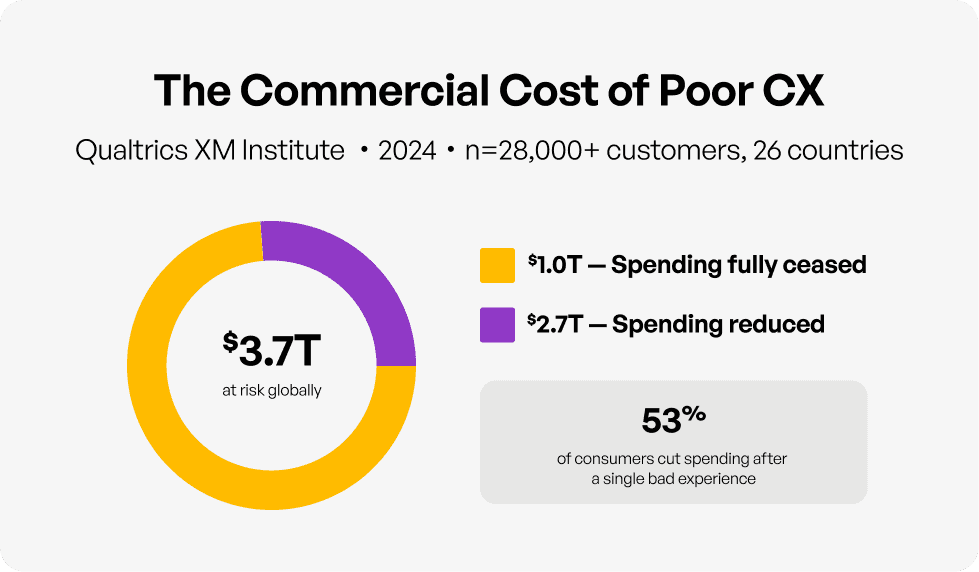
When marketing, analytics, and technology operate as separate workstreams, data becomes territorial rather than shared. Each team has its own definition of the customer, its own measurement framework, its own version of what success looks like. The organization ends up with three accurate pictures of the customer — none of which are the same picture.
What we've observed: The fracture point is almost never at the start of the journey. Awareness campaigns often work. The customer is reached. The message lands. The breakdown happens at transition — when the awareness-stage data should be informing the conversion-stage journey, and it isn't, because the team managing the journey doesn't have access to the data the awareness team collected.
What Most Organisations Get Wrong
The conventional response to this problem is to add tools. A new CDP to unify customer data. A new analytics platform to bridge the reporting gap. Another integration layer to connect the marketing stack to the data warehouse.
These investments aren't wrong. But they're incomplete — because the problem isn't a tool problem. It's an accountability problem.
Adding a shared data platform doesn't create a shared definition of outcomes. Integrating systems doesn't integrate the people who interpret what those systems tell you. You can build the most sophisticated martech stack in your sector and still have three teams that disagree on what a conversion looks like, what a quality customer journey means, and whether last week's campaign moved the commercial needle.
The organizations we've seen navigate this well didn't solve it by adding technology. They solved it by changing the structure. Marketing, analytics, and technology stopped being separate workstreams and became one capability — with shared data, shared definitions, and shared accountability for outcomes.
That's what Sumeru's DCX Trifecta is built on.
The DCX Trifecta: One Capability, Not Three Workstreams
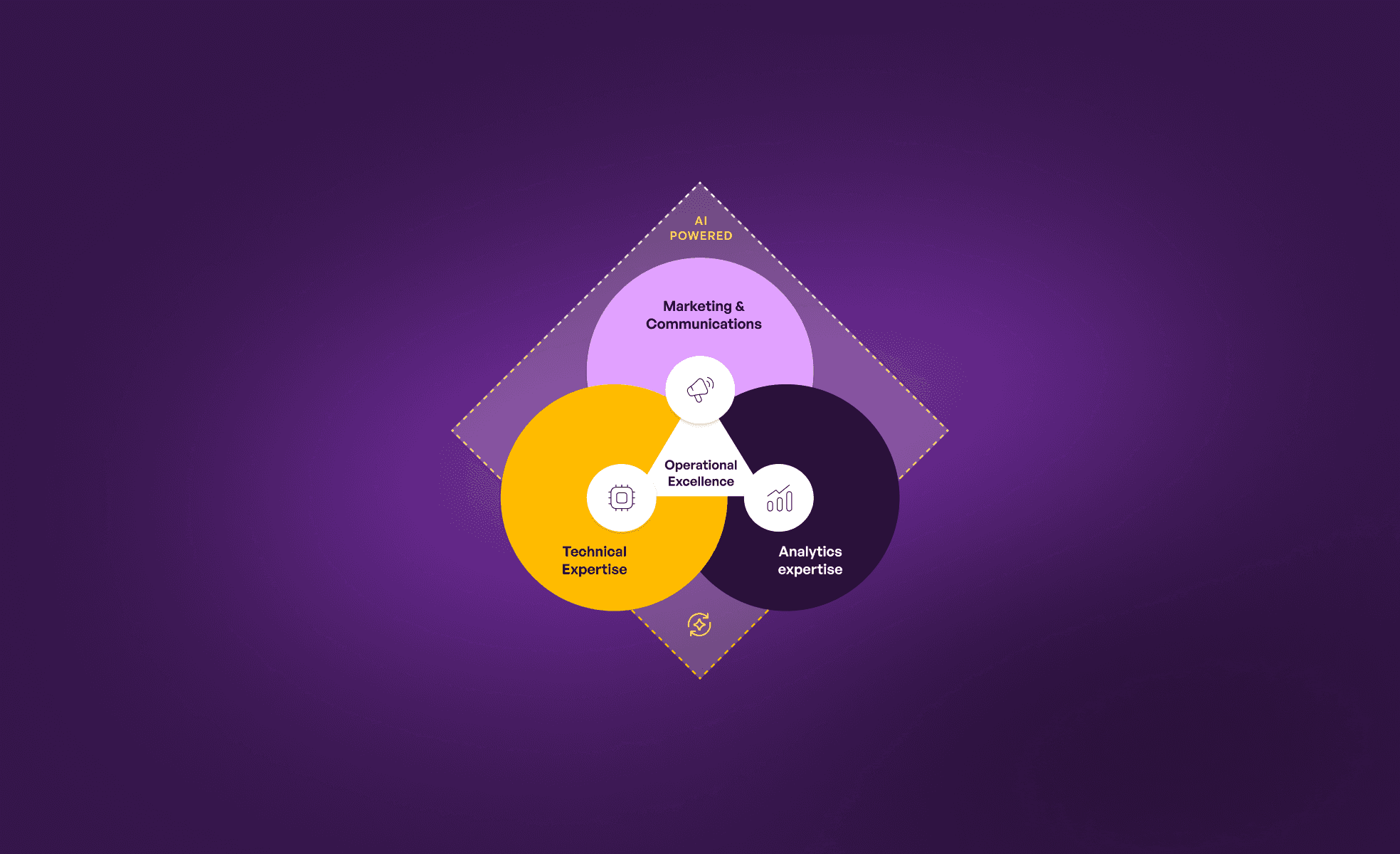
The DCX Trifecta brings together three disciplines that most organizations have — but rarely run as one:
Marketing expertise — human-centered strategy, campaign execution, and customer-centric design that connects brand to behavior across the full journey from awareness to loyalty.
Analytics expertise — a measurement framework that sits beneath both marketing and technology, defining what good looks like before a campaign launches, tracking what's actually happening during it, and building the attribution logic that connects spend to outcome.
Technology expertise — the platforms and integrations (Salesforce Marketing Cloud, Adobe Experience Cloud, GCP, HubSpot, Braze, and others) that execute the strategy and surface the data the analytics function needs.
The critical word is underneath. Analytics is not a reporting function that sits downstream of decisions already made. It's the foundation — the shared data model and shared outcome definition that marketing and technology are both building towards.
When these three run as one team with one accountability structure, something changes. Campaigns are designed with measurement logic built in from the start. Technology decisions are made against a shared definition of what the data needs to capture. And when leadership asks what a campaign produced, there's one answer — not three.
What It Produces in Practice
The output of a unified DCX capability isn't just better campaigns. It's a different kind of operational clarity.
When the engagement we ran with the Fortune 100 organization integrated all three workstreams into one program, leadership got something they hadn't had before: a measurable line from customer and patient awareness to commercial outcome. Not a dashboard that showed each team's metrics. A single view of what was moving the needle from first touchpoint to last — with the data infrastructure to prove it.
That's not a minor operational improvement. For organizations under pressure to demonstrate the ROI of every marketing investment, the ability to draw that line directly from spend to outcome changes the conversation at board level.
What we've seen across engagements: The first thing that changes when teams unify is not performance — it's vocabulary. Marketing, analytics, and technology teams often have different words for the same concepts: "conversion," "qualified lead," "active user," "engaged patient." Unification starts with a shared glossary, not a shared platform. The technology alignment follows when the definitional alignment is already in place.
How to Start: Three Questions Before the First Tool Decision
If you're building or rebuilding a DCX capability, resist the instinct to start with the platform decision. Start here instead:
Do your three teams share a definition of what a good outcome looks like? Not a proxy metric. Not a channel KPI. A commercial outcome — the thing leadership is actually accountable for. If marketing, analytics, and technology give different answers to this question, you have a structural problem that no tool will fix.
Is analytics upstream of decisions, or downstream of them? If analytics is primarily a reporting function — measuring what happened after campaigns ran — it has no ability to shape what those campaigns were built to measure. The measurement framework needs to be built before the campaign brief is written, not after the results come in.
Who is accountable for the journey between touchpoints? Awareness campaigns have owners. Conversion flows have owners. The gap between them — where most journeys fail — usually doesn't. Identifying who owns the handoff is more important than identifying which system should handle it.
These three questions don't require a new platform. They require a structural decision: whether marketing, analytics, and technology are going to operate as separate workstreams or as one capability with shared accountability.
Ready to build a unified DCX capability?
The Problem Has a Structure, Not Just a Symptom
Sumeru's DCX Trifecta wasn't built in a strategy workshop. It came out of a program we ran with a Fortune 100 organization that had a problem most enterprise leaders know well: a world-class technology stack, a separate agency running marketing, and a third team managing analytics. No shared data model. No agreed definition of what a good customer outcome looked like.
Three workstreams. Three versions of the customer journey.
The result was predictable — and repeatable. We've seen it across financial services, life sciences, retail, and beyond. Campaigns that couldn't use the data the organization already had. Journeys that started well and fell apart between systems. Leadership with no clear picture of what was actually moving people from awareness to decision.
This is not a failure of capability. Each team was competent. The marketing agency was excellent. The analytics function was sophisticated. The technology stack was enterprise-grade. The failure was relational — three capable workstreams with no shared accountability for the thing that mattered most: the customer's experience of moving through a journey.
What the Data Shows About Fragmented DCX
In 2026, only 25% of marketers say they're satisfied with how they use data to power personalized moments — a finding from Salesforce's State of Marketing 10th Edition (n=4,450 marketing decision-makers globally, published February 2026). Among teams actively using AI, 98% reported at least one data-related barrier to personalization — whether data silos, poor data quality, or a lack of customer preference data.
The gap isn't in ambition. It's in architecture.
When marketing, analytics, and technology operate as separate workstreams, data becomes territorial rather than shared. Each team has its own definition of the customer, its own measurement framework, its own version of what success looks like. The organization ends up with three accurate pictures of the customer — none of which are the same picture.
What we've observed: The fracture point is almost never at the start of the journey. Awareness campaigns often work. The customer is reached. The message lands. The breakdown happens at transition — when the awareness-stage data should be informing the conversion-stage journey, and it isn't, because the team managing the journey doesn't have access to the data the awareness team collected.
What Most Organisations Get Wrong
The conventional response to this problem is to add tools. A new CDP to unify customer data. A new analytics platform to bridge the reporting gap. Another integration layer to connect the marketing stack to the data warehouse.
These investments aren't wrong. But they're incomplete — because the problem isn't a tool problem. It's an accountability problem.
Adding a shared data platform doesn't create a shared definition of outcomes. Integrating systems doesn't integrate the people who interpret what those systems tell you. You can build the most sophisticated martech stack in your sector and still have three teams that disagree on what a conversion looks like, what a quality customer journey means, and whether last week's campaign moved the commercial needle.
The organizations we've seen navigate this well didn't solve it by adding technology. They solved it by changing the structure. Marketing, analytics, and technology stopped being separate workstreams and became one capability — with shared data, shared definitions, and shared accountability for outcomes.
That's what Sumeru's DCX Trifecta is built on.
The DCX Trifecta: One Capability, Not Three Workstreams
The DCX Trifecta brings together three disciplines that most organizations have — but rarely run as one:
Marketing expertise — human-centered strategy, campaign execution, and customer-centric design that connects brand to behavior across the full journey from awareness to loyalty.
Analytics expertise — a measurement framework that sits beneath both marketing and technology, defining what good looks like before a campaign launches, tracking what's actually happening during it, and building the attribution logic that connects spend to outcome.
Technology expertise — the platforms and integrations (Salesforce Marketing Cloud, Adobe Experience Cloud, GCP, HubSpot, Braze, and others) that execute the strategy and surface the data the analytics function needs.
The critical word is underneath. Analytics is not a reporting function that sits downstream of decisions already made. It's the foundation — the shared data model and shared outcome definition that marketing and technology are both building towards.
When these three run as one team with one accountability structure, something changes. Campaigns are designed with measurement logic built in from the start. Technology decisions are made against a shared definition of what the data needs to capture. And when leadership asks what a campaign produced, there's one answer — not three.
What It Produces in Practice
The output of a unified DCX capability isn't just better campaigns. It's a different kind of operational clarity.
When the engagement we ran with the Fortune 100 organization integrated all three workstreams into one program, leadership got something they hadn't had before: a measurable line from customer and patient awareness to commercial outcome. Not a dashboard that showed each team's metrics. A single view of what was moving the needle from first touchpoint to last — with the data infrastructure to prove it.
That's not a minor operational improvement. For organizations under pressure to demonstrate the ROI of every marketing investment, the ability to draw that line directly from spend to outcome changes the conversation at board level.
What we've seen across engagements: The first thing that changes when teams unify is not performance — it's vocabulary. Marketing, analytics, and technology teams often have different words for the same concepts: "conversion," "qualified lead," "active user," "engaged patient." Unification starts with a shared glossary, not a shared platform. The technology alignment follows when the definitional alignment is already in place.
How to Start: Three Questions Before the First Tool Decision
If you're building or rebuilding a DCX capability, resist the instinct to start with the platform decision. Start here instead:
Do your three teams share a definition of what a good outcome looks like? Not a proxy metric. Not a channel KPI. A commercial outcome — the thing leadership is actually accountable for. If marketing, analytics, and technology give different answers to this question, you have a structural problem that no tool will fix.
Is analytics upstream of decisions, or downstream of them? If analytics is primarily a reporting function — measuring what happened after campaigns ran — it has no ability to shape what those campaigns were built to measure. The measurement framework needs to be built before the campaign brief is written, not after the results come in.
Who is accountable for the journey between touchpoints? Awareness campaigns have owners. Conversion flows have owners. The gap between them — where most journeys fail — usually doesn't. Identifying who owns the handoff is more important than identifying which system should handle it.
These three questions don't require a new platform. They require a structural decision: whether marketing, analytics, and technology are going to operate as separate workstreams or as one capability with shared accountability.
Ready to build a unified DCX capability?
SOURCES
Salesforce, State of Marketing, 10th Edition, retrieved 2026-05-04, https://www.salesforce.com/news/stories/state-of-marketing-2026/
MarTech, These Are the Challenges and Barriers Impacting Your Martech Stack, February 2025, retrieved 2026-05-04, https://martech.org/these-are-the-challenges-and-barriers-impacting-your-martech-stack/
Qualtrics XM Institute, $3.7 Trillion of 2024 Global Sales at Risk Due to Bad CX, February 2024, retrieved 2026-05-04, https://www.qualtrics.com/xm-institute/blog/trillion-sales-at-risk-2024/
The CMO Survey, Marketers Claim a Broader Role and Increased Influence Amid Pressures, Spring 2025, retrieved 2026-05-04, https://cmosurvey.org/marketers-claim-a-broader-role-and-increased-influence-amid-pressures/
McKinsey & Company, Engaging the Evolving US Healthcare Consumer and Improving Business Performance, 2025, retrieved 2026-05-04, https://www.mckinsey.com/industries/healthcare/our-insights/engaging-the-evolving-us-healthcare-consumer-and-improving-business-performance
WORK WITH US
Innovation starts with collaboration
WORK WITH US
Innovation starts with collaboration
WORK WITH US
Innovation starts with collaboration
Insights